Clamps Blocking Your Drilling Positions?
Conventional clamps can obstruct hole patterns and require repeated repositioning, especially when drilling multiple holes across a steel plate.
Drilling creates downward thrust, torque, and breakthrough forces that can cause workpiece movement or deformation. Conventional clamps may also obstruct hole locations, especially on plates with multiple drilling positions. Reliable workholding must balance stability, hole access, and proper support.

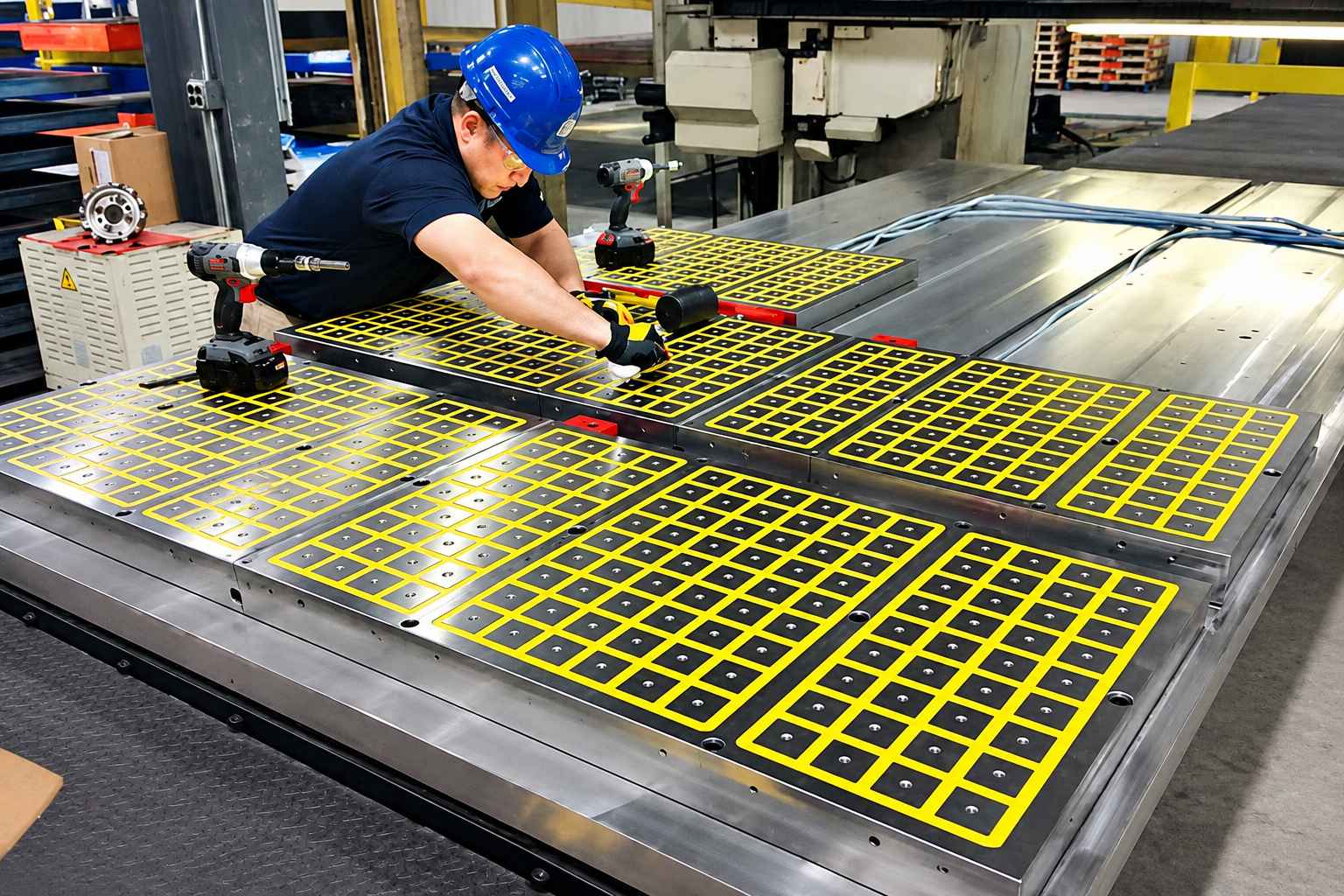
Magnetic workholding can reduce clamping obstructions and keep more drilling positions accessible, particularly for suitable steel plates and components.
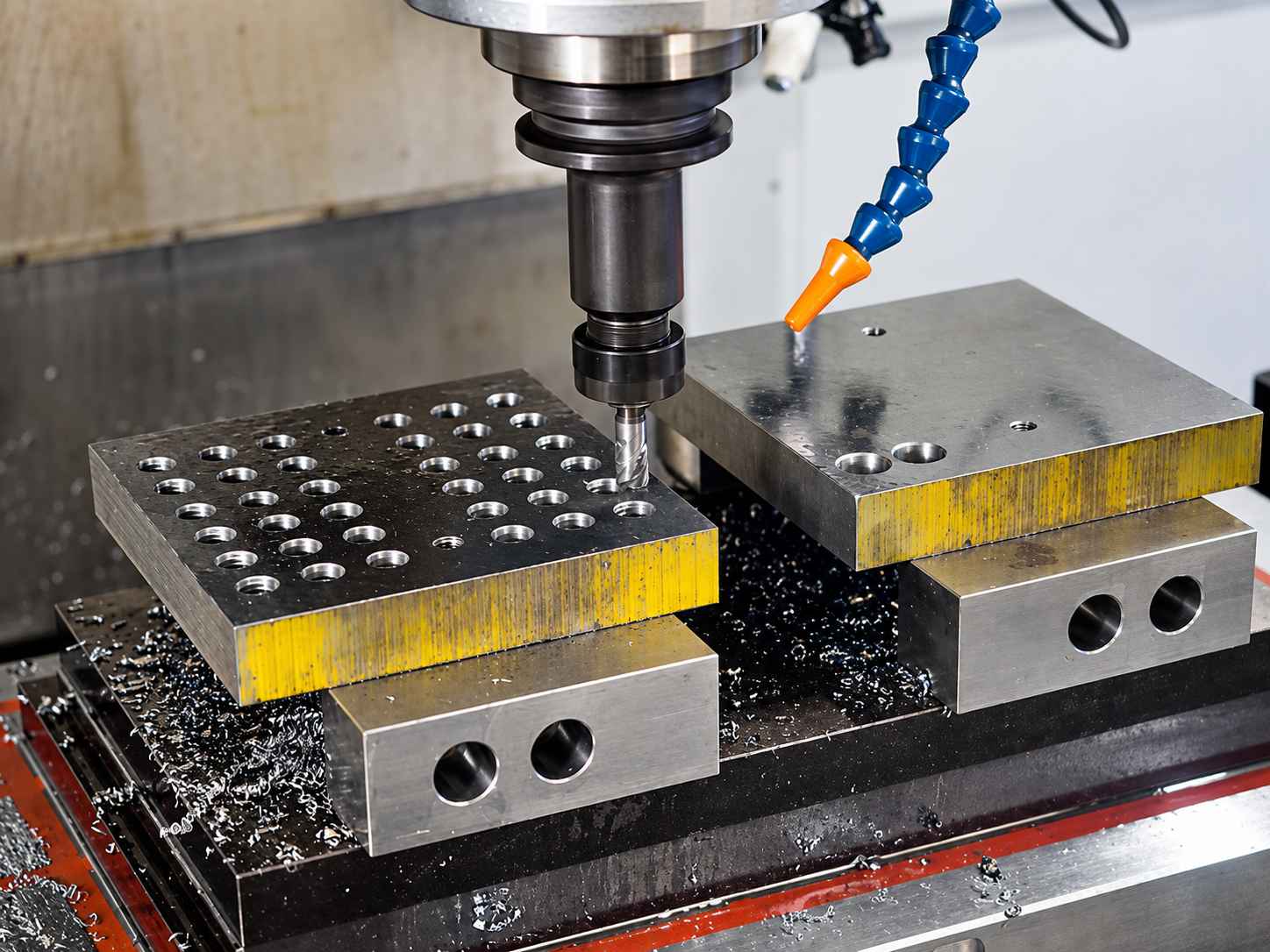
However, drilling requires more than magnetic holding force. Proper support, clearance beneath through-holes, and resistance to cutting torque are essential for a practical setup.
MAGWORK helps evaluate these requirements to identify suitable magnetic chuck or custom drilling fixture options.
Every drilling setup has different challenges. MAGWORK helps you find practical magnetic workholding solutions that improve hole accessibility, support delicate workpieces, and maintain stable positioning under drilling forces.
Conventional clamps can obstruct hole patterns and require repeated repositioning, especially when drilling multiple holes across a steel plate.
Thin steel plates may flex or lift when drilling pressure is concentrated around unsupported areas.
Drilling forces and breakthrough loads can cause shifting or rotation, particularly when magnetic holding alone is insufficient.
Standard magnetic chucks don't always fit complex hole patterns or special machine requirements. MAGWORK develops custom magnetic workholding solutions that combine tailored pole layouts, drilling clearance, and practical support structures—helping you achieve more flexible and efficient drilling setups.
Review part drawings, material, hole patterns, and contact conditions to identify suitable holding options.
Develop magnetic pole arrangements, support points, and locating features around your drilling requirements.
Adapt fixture dimensions, mounting interfaces, and drilling clearance to your machine setup.
Provide a recommended fixture configuration, layout drawing, and key technical specifications for review.
From multi-hole steel plates to precision blocks and custom machine setups, each drilling application requires a different holding approach. Explore how magnetic fixtures can improve hole access, workpiece support, and positioning efficiency.

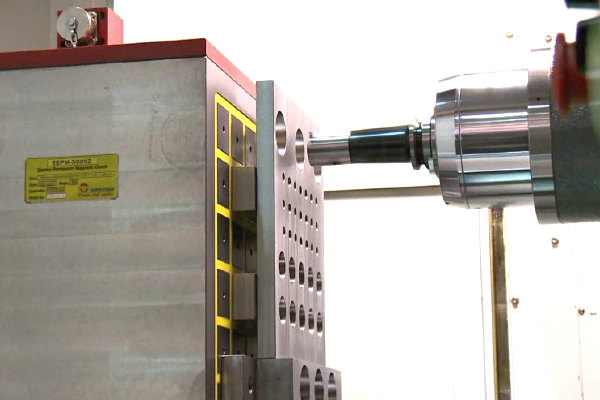
The Challenge: Dense hole patterns leave little room for conventional clamps, often requiring repeated repositioning and interrupting the drilling process.
Our Solution: A custom magnetic drilling fixture can combine strategically positioned magnetic poles, mechanical locating stops, and clearance beneath through-holes to keep more drilling positions accessible while supporting the workpiece.
Engineering for drilling steel workpieces begins with support beneath holes with relief paths and locating stops. Workpiece geometry and actual machine travel define the fixture outline; the magnetic pole arrangement must then be evaluated within that structure.

From custom dimensions and magnetic pole structures to precision-ground working faces, we focus on the manufacturing details that affect fixture accuracy, durability, and practical performance.
Precision MachiningMagnetic AssemblySurface Finishing
Suitable steel bodies, magnetic materials, and structural components are prepared according to the approved design to support reliable product construction.

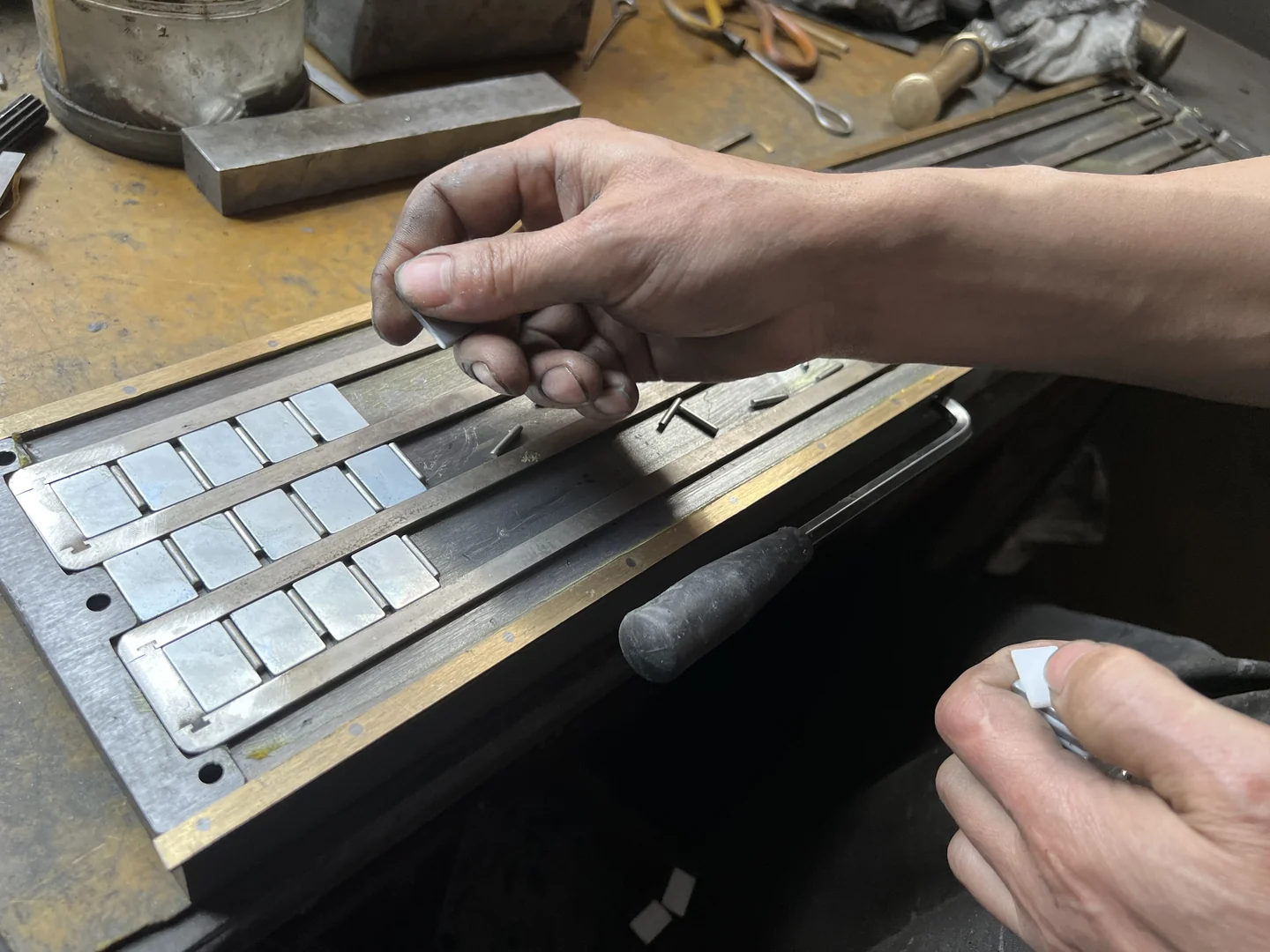
Critical dimensions, mounting features, and magnetic pole structures are manufactured and assembled to meet the agreed technical specifications.

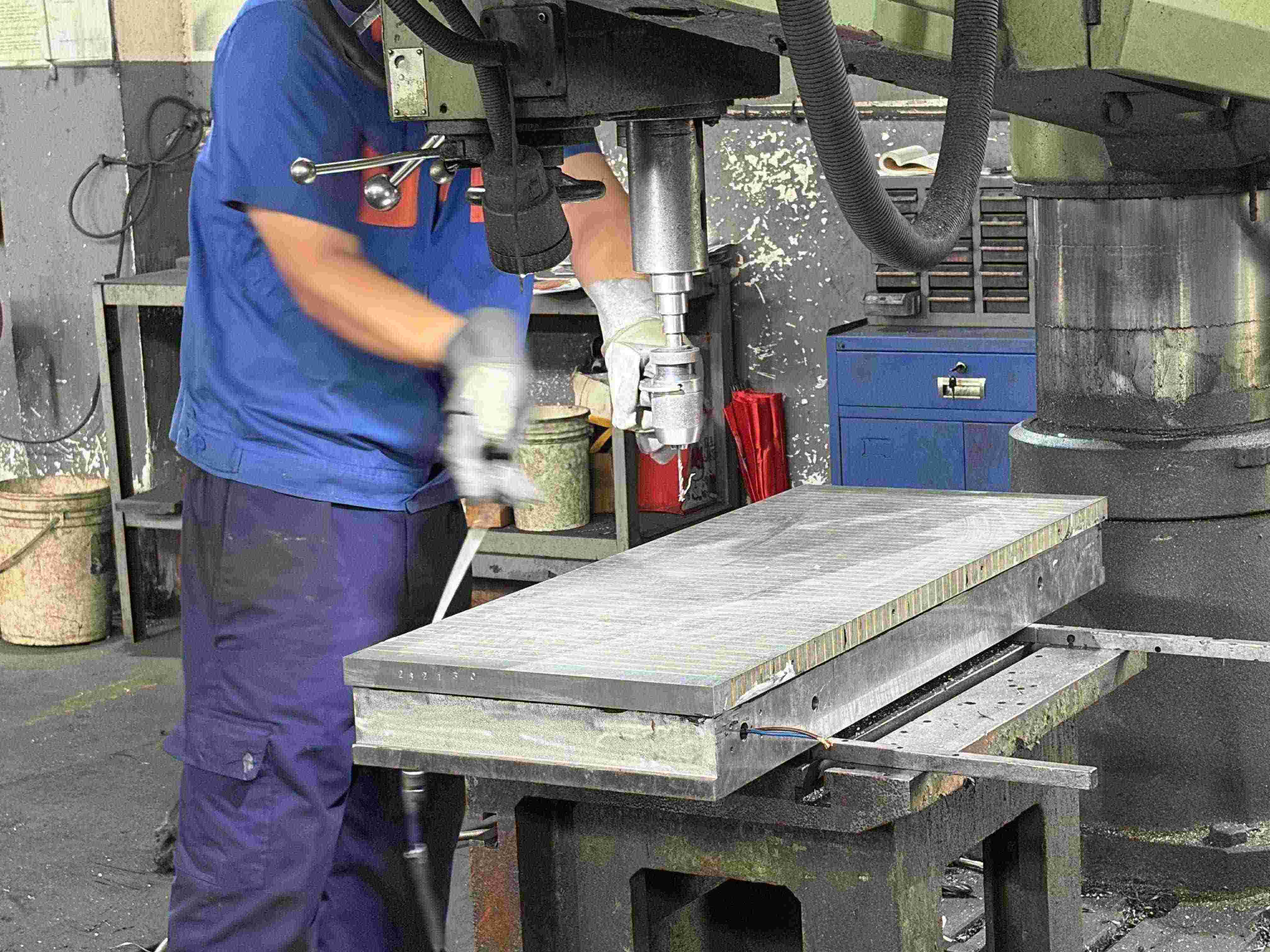
Precision surface grinding and dimensional checks help achieve the required working-face geometry and contact conditions for the intended drilling fixture.

A magnetic chuck may look perfect but still fail to meet your drilling requirements. MAGWORK coordinates critical inspections against agreed specifications, from dimensional accuracy and magnetic holding to switching functions and electrical safety—helping reduce installation issues and unexpected production delays.
Custom magnetic workholding shouldn't mean complicated sourcing or endless technical follow-ups. MAGWORK coordinates engineering communication, manufacturing, quality checks, and delivery through one point of contact—helping you save time and keep your drilling fixture project on track.
Share workpiece drawings, hole patterns, and drilling machine details.
Assess application feasibility and suitable magnetic workholding options.
Receive a recommended fixture configuration for your drilling requirements.
Confirm fixture dimensions, mounting details, and agreed specifications.
Arrange materials and components for the approved design.
Coordinate manufacturing, assembly, and agreed quality checks.
Protective packaging, export documentation, and delivery coordination.
Assistance with installation, operation, and technical questions.
Find answers to common questions about custom magnetic drilling fixtures, workpiece compatibility, drilling stability, and application-specific magnetic workholding solutions.
Yes. MAGWORK can help develop custom magnetic drilling fixtures with tailored dimensions, pole layouts, locating features, and mounting interfaces based on your workpiece and machine requirements.
A custom magnetic fixture can keep more drilling positions accessible by reducing top-side clamping interference. The design should account for the complete hole pattern, locating stops, and drill breakthrough clearance
Yes, when magnetic contact and support are sufficient. Fine-pole configurations and localized support may help accommodate thin steel plates, while clearance beneath drilling points helps prevent damage to the chuck surface.
A suitable fixture combines magnetic holding with mechanical locating stops and stable support. MAGWORK evaluates drilling thrust, torque, contact conditions, and workpiece geometry to recommend an appropriate arrangement.
Depending on the available contact area, custom pole extensions, support blocks, and locating features may accommodate certain uneven steel components. Each application requires evaluation of magnetic engagement and drilling loads.
There is no universal choice. Permanent, electromagnetic, and electro-permanent magnetic chucks offer different switching and control methods. The suitable option depends on workpiece size, drilling conditions, operating frequency, and machine requirements.
Suitable magnetic systems may support repeated positioning and automated loading. Controller integration, locating accuracy, switching sequences, and safety requirements must be evaluated for the intended production process.
Share your workpiece drawing, material, thickness, hole pattern, drill diameter, machine model, and production requirements. MAGWORK can use these details to evaluate suitable magnetic workholding solutions.
Standard magnetic chucks don't fit every drilling application. From complex hole patterns to thin steel plates and nonstandard machine setups, MAGWORK helps develop magnetic workholding solutions around your actual machining needs.
Share your drawing or drilling requirements. We'll help you explore a suitable fixture configuration.