A magnetic chuck holds steel and other ferromagnetic workpieces in place using magnetic force instead of mechanical clamps. But how does a magnetic chuck work, and how does it release the workpiece after machining?
The answer depends on the type of magnetic chuck. Permanent, electromagnetic, and electro-permanent magnetic chucks use different methods to control magnetic force.
In this guide, you'll learn how magnetic chucks work, what affects their holding force, and how to choose the right type for grinding, milling, turning, and other machining applications.
What Is a Magnetic Chuck?
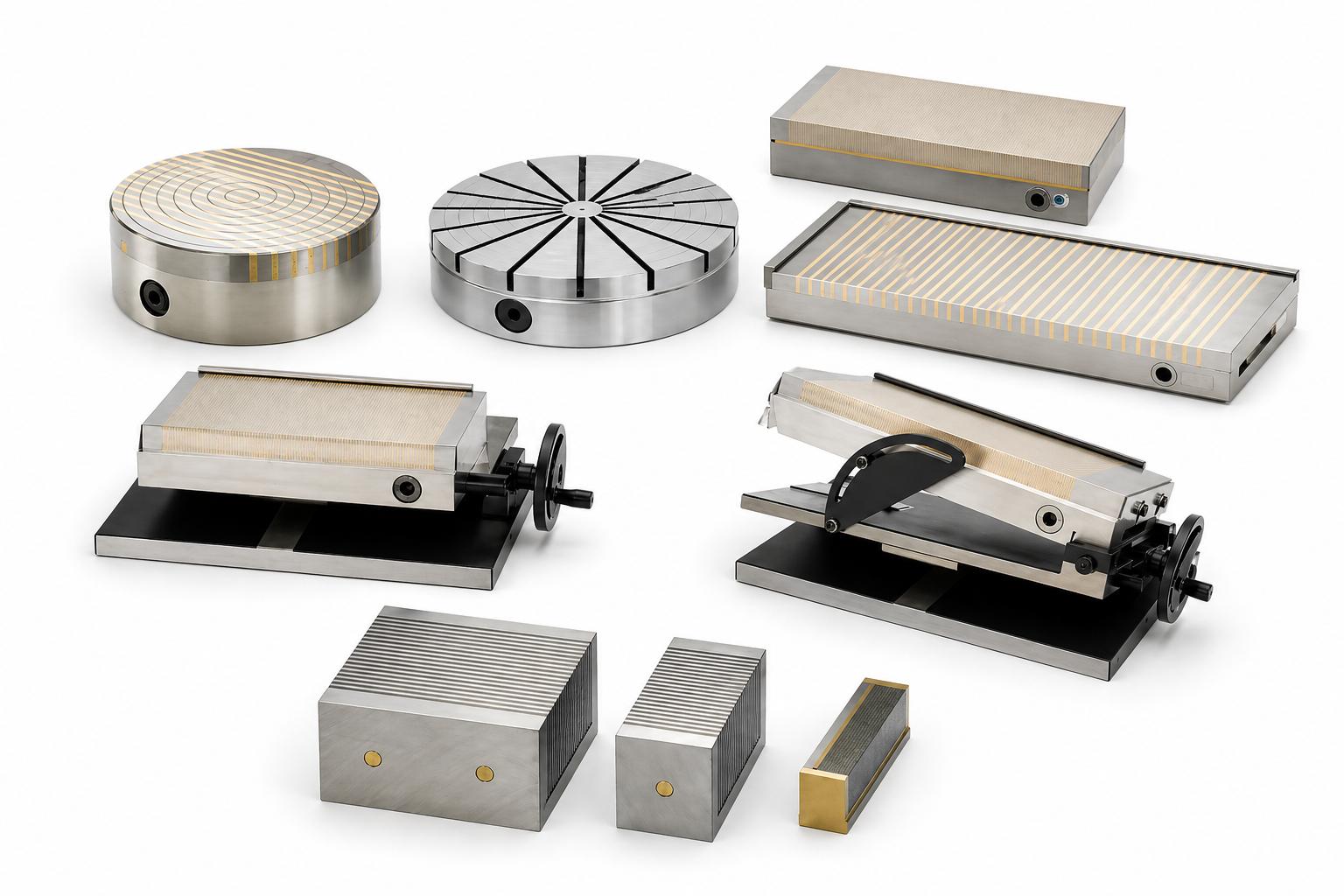
A magnetic chuck is a workholding device that uses magnetic force to securely hold ferromagnetic workpieces during machining. It is commonly used on grinding machines, CNC milling machines, and lathes to hold materials such as carbon steel, cast iron, and certain stainless steels.
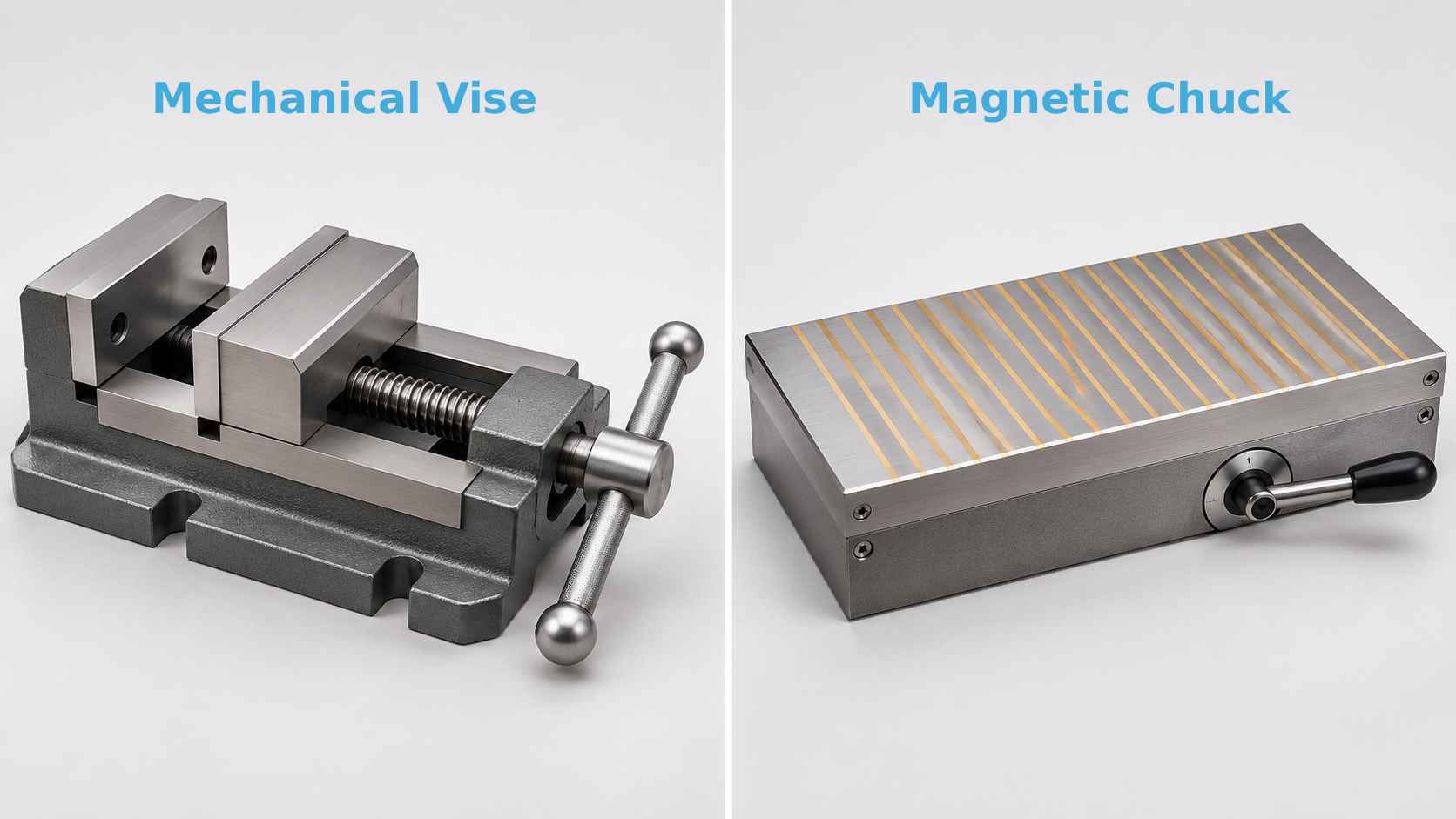
Unlike mechanical clamps, a magnetic chuck holds the workpiece from below, leaving the top and sides more accessible for machining. This reduces clamping interference and makes workpiece loading and positioning easier.
How Does a Magnetic Chuck Work?
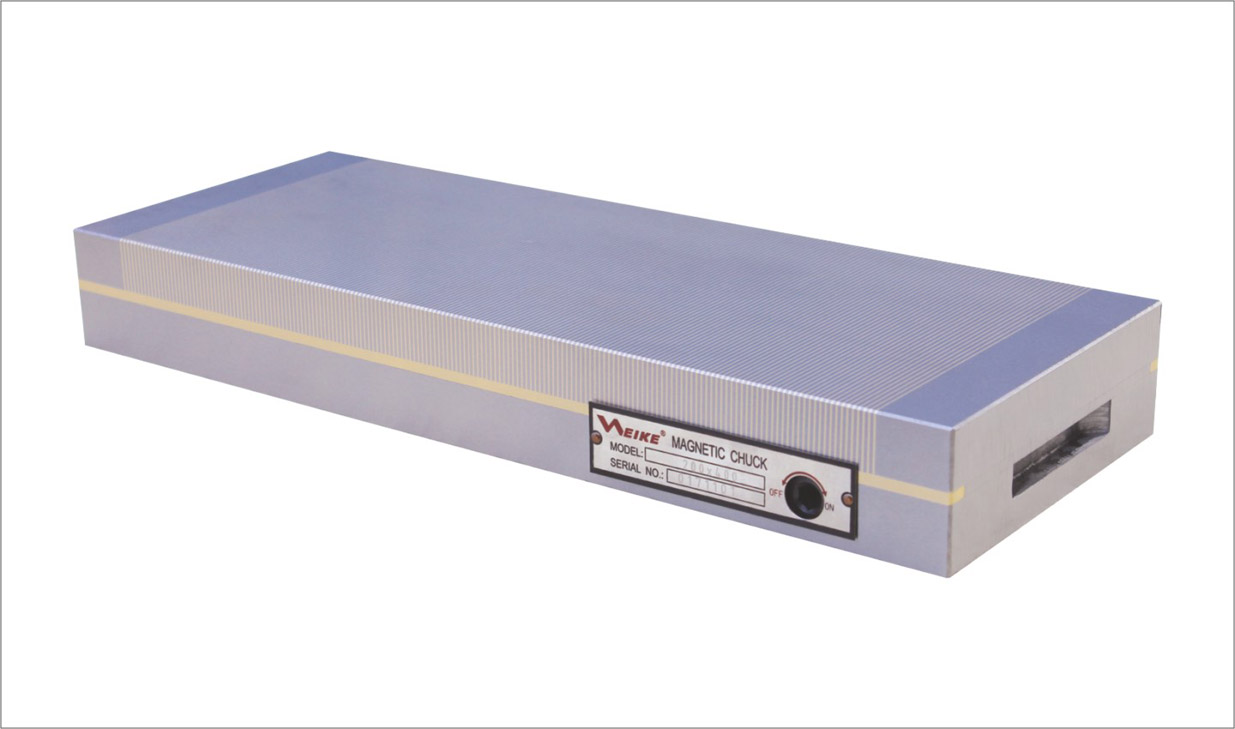
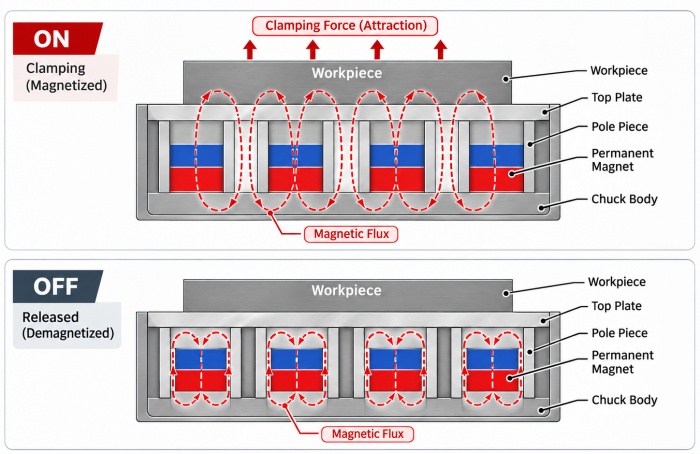
A magnetic chuck works by creating a magnetic field that holds a ferromagnetic workpiece against its surface. The magnetic flux passes through the chuck's poles and the workpiece, forming a magnetic circuit that generates holding force. The magnetic chuck working principle involves three main steps:
1. Magnetic Flux Generation
The magnetic field is produced by permanent magnets or electromagnetic coils inside the chuck. The magnetic poles direct the magnetic flux toward the chuck surface, where the workpiece is placed.
2. Magnetic Circuit and Workpiece Holding
When a steel workpiece contacts the chuck surface, magnetic flux passes through it and forms a closed magnetic circuit. This creates an attractive force that holds the workpiece in place. The holding force depends on the material, contact area, thickness, and air gap between the workpiece and chuck.
3. Magnetic Switching and Workpiece Release
To release the workpiece, the magnetic field at the chuck surface must be reduced or redirected. Depending on the chuck type, this is done by turning a manual handle, switching off the electrical current, or applying an electrical pulse. Once the holding force is reduced, the workpiece can be removed.
How Do Different Types of Magnetic Chucks Work?
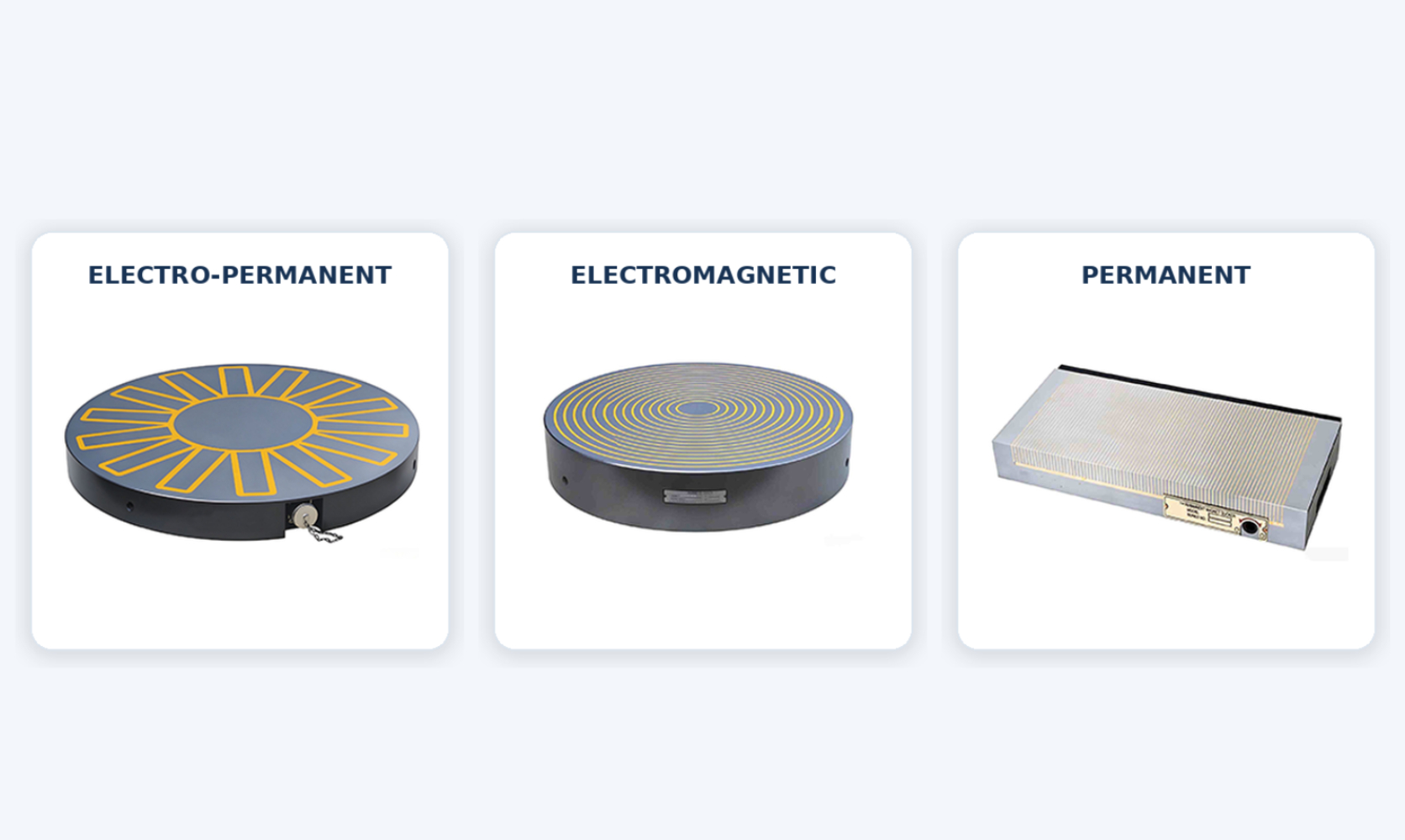
Magnetic chucks are divided into three main types: permanent, electromagnetic, and electro-permanent. All three use magnetic force to hold workpieces, but they differ in how the magnetic field is generated and controlled.
1. How Does a Permanent Magnetic Chuck Work?
A permanent magnetic chuck uses built-in permanent magnets to hold ferromagnetic workpieces without electricity. Turning the operating handle changes the internal magnetic circuit. In the ON position, magnetic flux passes through the workpiece to create holding force. In the OFF position, the magnetic flux is redirected inside the chuck, allowing the workpiece to be removed.
Permanent magnetic chucks are commonly used for surface grinding and other applications that require simple, manual clamping.
2. How Does an Electromagnetic Chuck Work?
An electromagnetic chuck uses electrical current flowing through internal coils to generate a magnetic field. When power is supplied, the chuck attracts and holds the workpiece. When the current is switched off, the magnetic field decreases, allowing the workpiece to be released. Some models also allow you to adjust the holding force by controlling the current.
Electromagnetic chucks are often used in grinding operations where adjustable magnetic force is useful.
3. How Does an Electro-Permanent Magnetic Chuck Work?
An electro-permanent magnetic chuck combines permanent magnets with electrically controlled magnetic switching. A short electrical pulse changes the internal magnetic state to activate or release the chuck. Once activated, the chuck maintains its holding force without continuous power.
This design is suitable for CNC machining and automated production systems, where electrical control, reliable clamping, and reduced power consumption are important.
Feature | Permanent | Electromagnetic | Electro-Permanent |
Magnetic source | Permanent magnets | Electromagnetic coils | Permanent magnets |
Switching method | Manual handle | Electrical current | Electrical pulse |
Continuous power required | No | Yes | No |
Adjustable holding force | Generally no | Yes, on supported models | Design-dependent |
Holding force during power loss | Maintained | Generally lost | Maintained |
Typical applications | Surface grinding | Precision grinding | CNC milling, automation |
What Affects Magnetic Chuck Holding Force?
The holding force of a magnetic chuck depends on more than its magnetic strength. Workpiece material, thickness, surface contact, and pole layout all affect how securely the chuck holds a part during machining.
1. Workpiece Material and Thickness
Magnetic chucks work best with ferromagnetic materials such as carbon steel and cast iron. Materials with lower magnetic permeability may produce less holding force. Workpiece thickness also matters. Very thin parts may not provide an effective magnetic path, reducing the chuck's holding capacity.
2. Contact Area and Surface Condition
A larger effective contact area generally provides stronger holding force. Uneven surfaces, rust, chips, or air gaps between the workpiece and chuck can reduce magnetic attraction. Keeping both surfaces clean and flat helps maintain reliable clamping.
3. Magnetic Pole Layout and Spacing
The size and spacing of magnetic poles affect how magnetic flux flows through the workpiece. Fine-pole chucks are often suitable for smaller or thinner parts, while larger pole designs can support thicker workpieces. The right pole layout depends on the workpiece dimensions and machining requirements.
4. Machining Forces and Workpiece Support
Cutting forces can push or slide a workpiece across the chuck surface. A high magnetic holding force does not always mean the workpiece can resist strong sideways forces. For heavy milling or demanding operations, additional stops or supports may be needed to prevent movement.
Where Are Magnetic Chucks Used?
Magnetic chucks are widely used in metalworking to hold ferromagnetic workpieces during grinding, milling, turning, and precision machining. Each application requires a suitable chuck design, magnetic pole layout, and holding force to keep the workpiece stable.
1. Surface Grinding
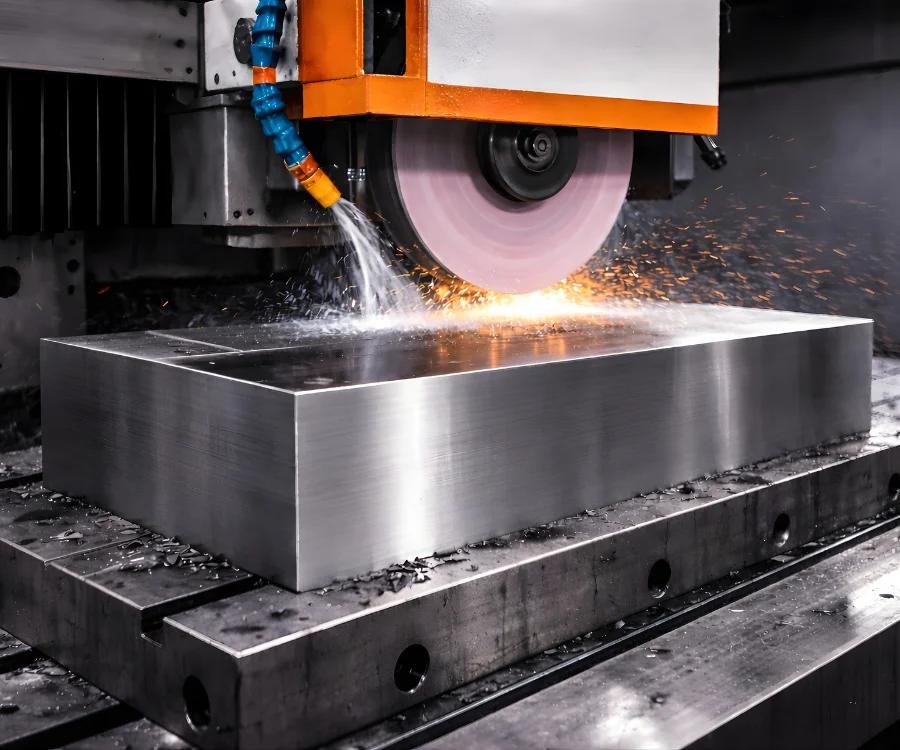
Magnetic chucks are commonly used for surface grinding to hold steel plates, blocks, dies, and precision components. They provide a stable holding surface without mechanical clamps blocking the grinding wheel.
Fine-pole magnetic chucks are often preferred for smaller or thinner parts because their pole spacing supports effective magnetic contact. Larger workpieces may require different pole layouts. Magnetic workholding also allows multiple suitable parts to be arranged on one chuck for batch grinding.
2. CNC Milling
In CNC milling, magnetic chucks are used to hold mold bases, steel plates, and other ferromagnetic workpieces. Unlike conventional clamps, they leave the top and sides of the workpiece more accessible, making multi-side machining easier.
Electro-permanent magnetic chucks are often used for CNC milling because they maintain holding force without continuous power. However, milling creates significant sideways cutting forces, so proper pole selection, sufficient contact area, and mechanical stops may be required to prevent movement.
3. Turning
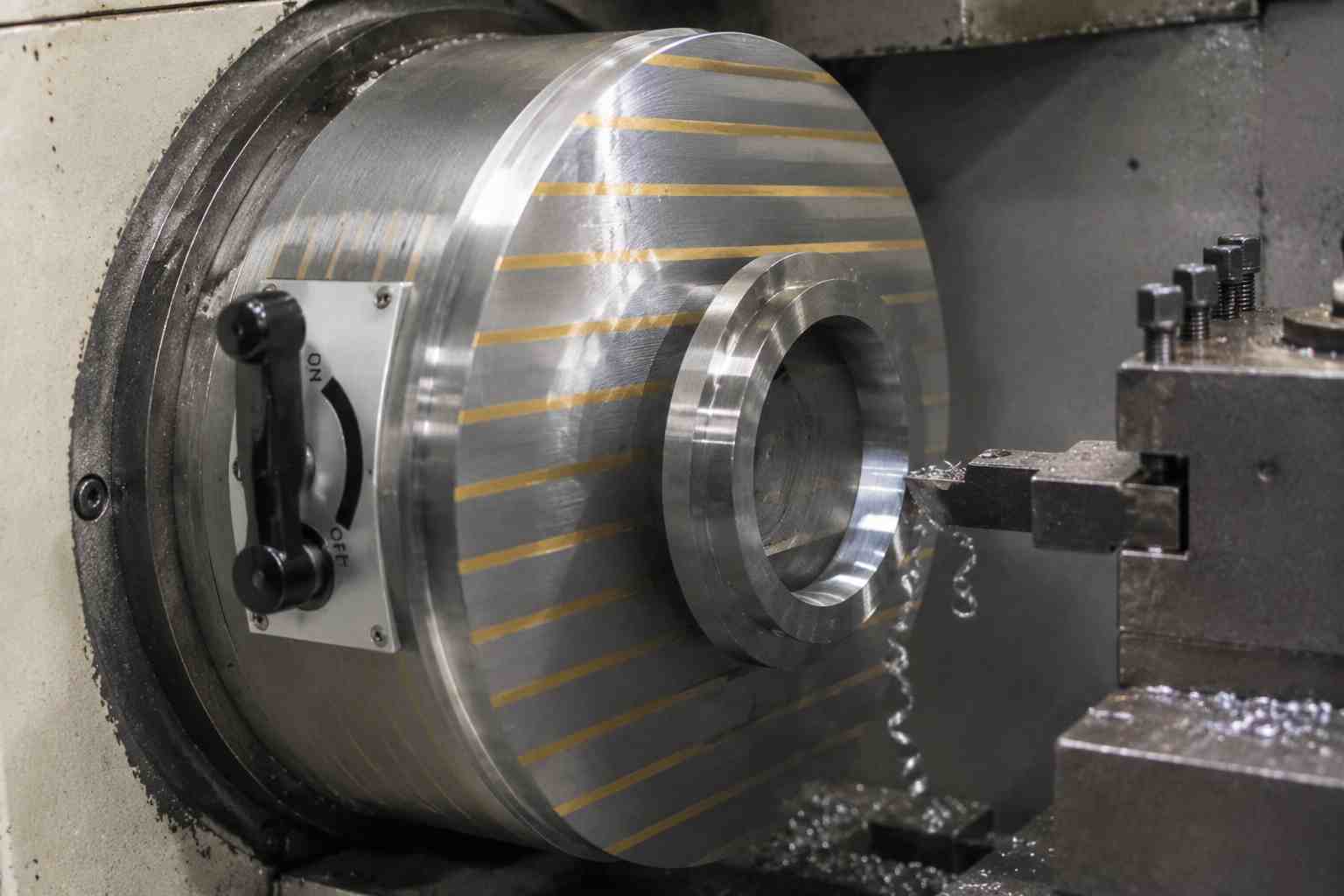
Circular magnetic chucks are used in turning operations to secure steel rings, discs, flanges, and other round components. They are especially useful when conventional jaws would interfere with machining the outer diameter or front face.
Depending on the machine and workpiece, magnetic chucks can help reduce clamping marks and improve access to the cutting area. The chuck must be rated for the operating speed, and the holding arrangement must withstand both cutting forces and rotational loads.
4. EDM and Precision Machining
Magnetic chucks are also used in EDM and precision machining to hold small steel parts, thin plates, and detailed components. They offer a low-profile clamping method that keeps the machining area accessible.
Fine-pole magnetic chucks can provide better support for suitable small or thin workpieces. However, the chuck must be compatible with the EDM process, and the workpiece must have enough magnetic contact area to remain secure. This is particularly important when machining delicate parts that are difficult to hold with conventional fixtures.
How to Choose the Right Magnetic Chuck
Choosing the right magnetic chuck depends on your workpiece, machining process, and clamping requirements. Before selecting a chuck, consider these five factors:
1. Workpiece Material: Check whether your material is ferromagnetic. Carbon steel and cast iron are generally suitable, while aluminum and most austenitic stainless steels cannot be held effectively by magnetic force.
2. Workpiece Size and Thickness: Consider the dimensions, thickness, and contact area of your workpiece. Thin or small parts may require fine-pole chucks, while larger parts may benefit from wider pole spacing.
3. Machining Process: Grinding, milling, and turning create different cutting forces. Choose a chuck with sufficient holding capacity for your operation, and consider additional supports for heavy machining.
4. Magnetic Control: Permanent magnetic chucks are suitable for manual operation, electromagnetic chucks offer adjustable holding force on supported models, and electro-permanent chucks support electrically controlled clamping without continuous power.
5. Machine Compatibility: Check the chuck's dimensions, mounting method, control system, and available installation space to ensure it fits your machine.
For custom applications, you can share your workpiece drawings, material specifications, and machining requirements with Magwork to evaluate a suitable magnetic workholding solution.
FAQs
Does a magnetic chuck need electricity to work?
Not all magnetic chucks require electricity. Permanent magnetic chucks operate without power, while electromagnetic chucks need continuous electricity to maintain their holding force. Electro-permanent magnetic chucks only require short electrical pulses to switch between clamping and release states.
Can a magnetic chuck hold stainless steel?
It depends on the type of stainless steel. Ferritic and martensitic stainless steels are generally magnetic, while most austenitic grades, such as 304 and 316, are weakly magnetic or non-magnetic. Always check the material's magnetic properties before using a magnetic chuck.
Can a magnetic chuck lose its holding force?
Yes. Holding force can decrease due to poor surface contact, air gaps, thin workpieces, or unsuitable materials. Electromagnetic chucks may also lose their holding force during a power failure. Regular inspection and proper workpiece positioning help maintain reliable clamping.
Is a magnetic chuck safe for heavy milling?
A magnetic chuck can be used for heavy milling if the workholding system is designed for the expected cutting forces. The chuck must provide sufficient resistance to both lifting and sideways movement. Mechanical stops or additional supports may be necessary to keep the workpiece secure.
Why does a workpiece remain magnetic after the chuck is switched off?
Some ferromagnetic materials retain residual magnetism after the magnetic field is removed. This can cause the workpiece to attract metal chips or remain slightly attached to the chuck. A demagnetization process may be needed to remove the remaining magnetism before further machining or inspection.
Conclusion
Understanding how a magnetic chuck works helps you choose a suitable workholding solution for your machining needs. Permanent, electromagnetic, and electro-permanent magnetic chucks use different methods to control magnetic force, but their holding performance also depends on workpiece material, contact area, and machining conditions.
Choosing the right chuck can improve workpiece stability, reduce clamping interference, and support more efficient machining. If you need help selecting a magnetic chuck, Magwork can help you evaluate your workpiece specifications, machine requirements, and custom workholding needs.