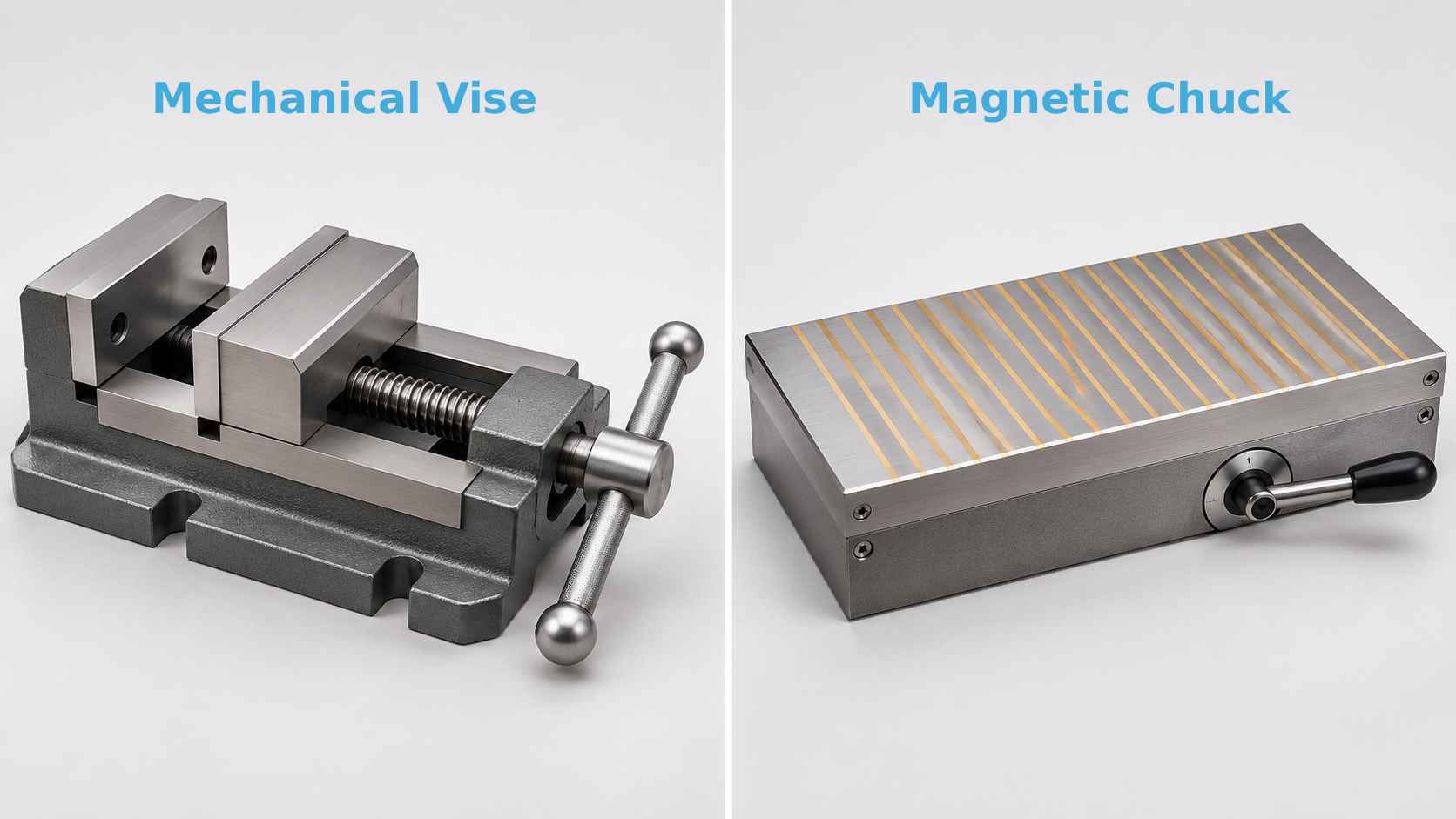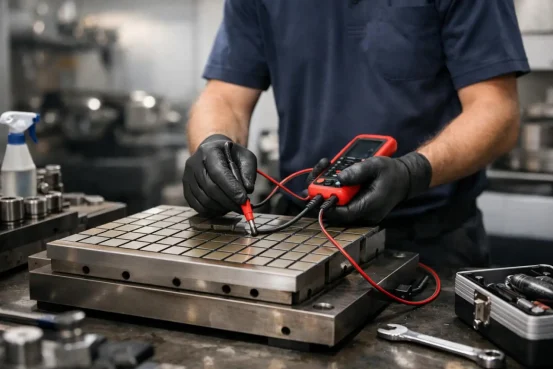
A magnetic chuck that works well for surface grinding may not be the right choice for heavy-duty milling. If you choose the wrong type, you could face poor workpiece stability, longer setup times, or problems during machining.
There are three main types of magnetic chucks: permanent, electromagnetic, and electro-permanent. Each uses a different method to control magnetic holding, with its own features and applications.
Knowing how these types differ helps you choose the right magnetic chuck for your workpiece, machine, and machining process.
What Are the Main Types of Magnetic Chucks?
Magnetic chucks are divided into three main types based on how they generate and control magnetic force: permanent, electromagnetic, and electro-permanent. Each type holds ferromagnetic workpieces, such as steel and cast iron, but uses a different method to clamp and release them.
Features | Permanent Magnetic Chuck | Electromagnetic Chuck | Electro-Permanent Magnetic Chuck |
Magnetic source | Permanent magnets | Energized coils | Permanent magnets and electrical pulses |
Power requirement | No continuous power | Continuous power | Power required for switching only |
Switching method | Mechanical lever or switch | Electrical control | Electrical pulse |
Power-off holding | Yes | No, unless a backup system is provided | Yes |
Magnetic force adjustment | Generally limited | Available on suitable models | Depends on system design |
Automation compatibility | Depends on the application | Suitable for electrically controlled systems | Well suited to CNC and PLC-controlled systems |
1. Permanent Magnetic Chucks
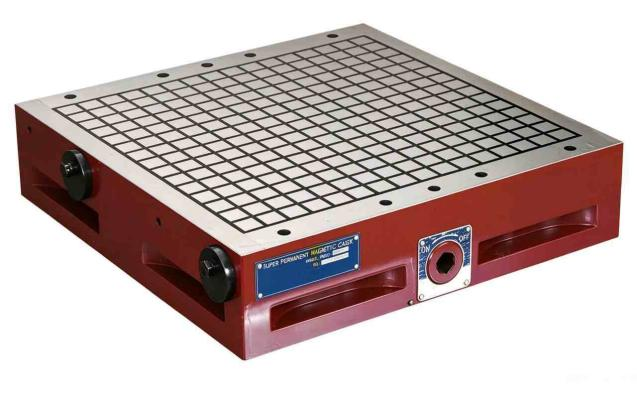
A permanent magnetic chuck uses built-in permanent magnets to hold your workpiece without electricity. You can turn the magnetic force on or off using a mechanical lever or switch that changes the internal magnetic circuit.
These chucks are simple to operate and require relatively little maintenance. However, most models do not allow you to adjust the holding force during machining.
Permanent magnetic chucks are commonly used for surface grinding and precision grinding, especially when you need reliable holding for flat steel workpieces.
2. Electromagnetic Chucks
An electromagnetic chuck uses electric current flowing through internal coils to generate magnetic force. You can activate or release the chuck through an electrical control system.
One key advantage is adjustable magnetic force. On suitable models, you can change the holding strength to match different workpiece requirements. However, the chuck needs continuous power to maintain its magnetic holding force, unless a backup system is provided.
Electromagnetic chucks are used in surface grinding, milling, and some automated machining setups where electrical control is required.
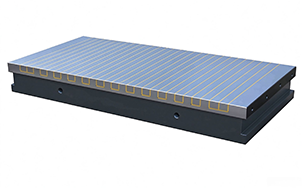
3. Electro-Permanent Magnetic Chucks
An electro-permanent magnetic chuck combines permanent magnets with electrically controlled switching. It uses a short electrical pulse to activate or release the magnetic holding force.
Once activated, the chuck holds your workpiece without continuous electricity. This allows the magnetic force to remain active during a power failure.
Electro-permanent magnetic chucks are commonly used for CNC milling, heavy-duty machining, and automated production. They are particularly useful when you need magnetic workholding that can be integrated with CNC or PLC control systems.
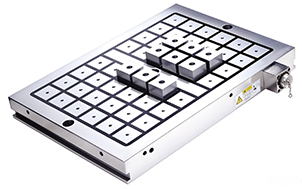
Different Magnetic Chuck Designs and Configurations
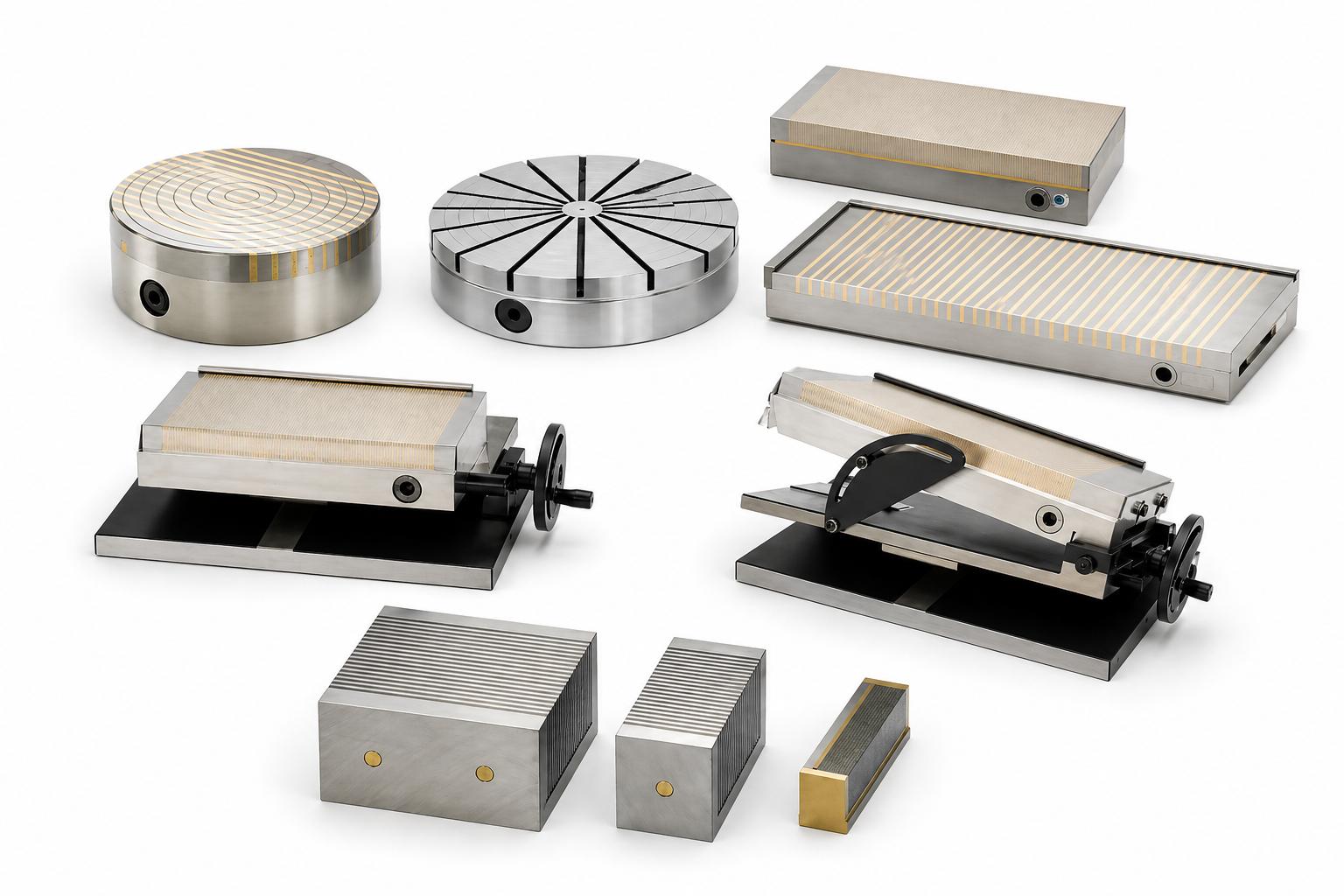
Besides the three main types, you can also choose magnetic chucks based on their shape, pole arrangement, and special functions. These designs help you match the chuck to your workpiece size, shape, and machining needs.
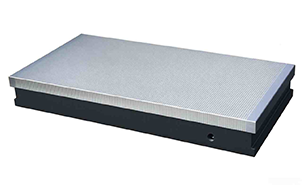
Rectangular Magnetic Chucks
Rectangular magnetic chucks have a flat, rectangular holding surface. They are commonly used to hold steel plates, blocks, and other flat workpieces during surface grinding and milling.
You can choose different sizes and pole arrangements based on your machine table and workpiece dimensions. Their flat design also makes it easier to position multiple workpieces for batch processing.
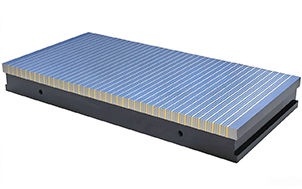
Round Magnetic Chucks
Round magnetic chucks have a circular holding surface, often with radial or concentric magnetic poles. They are designed for round workpieces such as rings, discs, and cylindrical components.
You will commonly find them on rotary grinding machines and lathes. When selecting one, you need to check its diameter, pole arrangement, and compatibility with your machine's rotation requirements.
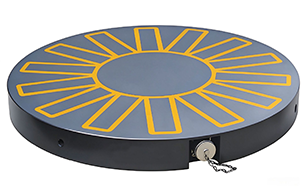
Fine-Pole and Standard-Pole Magnetic Chucks
The main difference between fine-pole and standard-pole magnetic chucks is the spacing between their magnetic poles.
Fine-pole magnetic chucks have closely spaced poles, making them suitable for smaller or thinner ferromagnetic workpieces when the pole design matches the material and thickness.
Standard-pole magnetic chucks have wider pole spacing and are generally used for larger or thicker workpieces.
You should choose the pole spacing based on your workpiece dimensions, thickness, and contact area rather than assuming that smaller pole spacing always provides stronger holding force.
Sine Magnetic Chucks
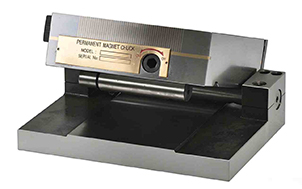
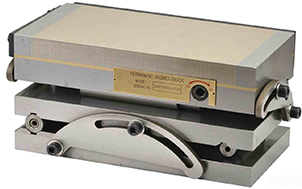
Sine magnetic chucks allow you to hold workpieces at a controlled angle during precision grinding. They use a sine mechanism to set the required angle, typically with gauge blocks.
You can choose between two common designs:
• Single Sine Magnetic Chuck: Allows angular adjustment around one axis, making it suitable for grinding a single inclined surface.
• Double Sine Magnetic Chuck: Allows adjustment around two axes, giving you more flexibility when grinding compound angles.
These chucks are useful when you need accurate angular positioning for toolmaking, mold components, or other precision parts.
Applications of Magnetic Chucks in Machining
Your magnetic chuck should match the machining process, workpiece, and cutting forces. The following applications show where different chuck designs are commonly used.
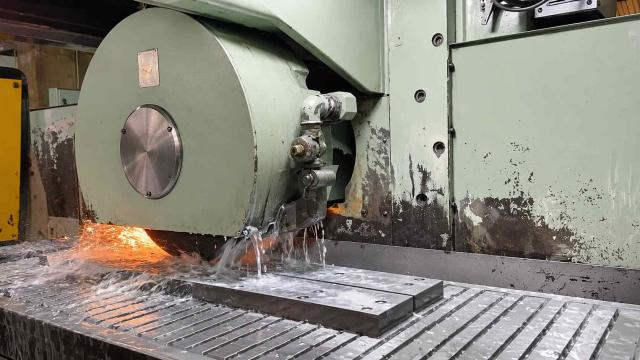
Magnetic Chucks for Surface Grinding
Surface grinding requires stable workholding to maintain a flat and accurate finish. You can use permanent magnetic chucks for general grinding tasks or fine-pole designs for smaller and thinner steel workpieces.
Electromagnetic chucks are another option when you need electrical control over the holding force. Your choice should account for workpiece thickness, contact area, and grinding conditions.
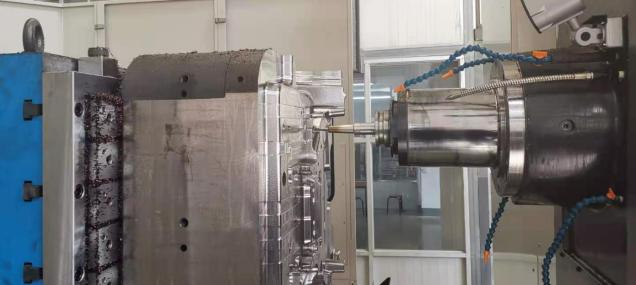
Magnetic Chucks for Milling and Heavy-Duty Cutting
Milling creates higher cutting forces and vibration than many grinding operations. You need a magnetic chuck that can hold the workpiece securely throughout the cutting process.
Electro-permanent magnetic chucks are often used for CNC milling and heavy-duty cutting. Their holding force remains active without continuous power. Electromagnetic chucks are also suitable for certain milling applications when you need adjustable magnetic force and electrical control.
Magnetic Chucks for Turning
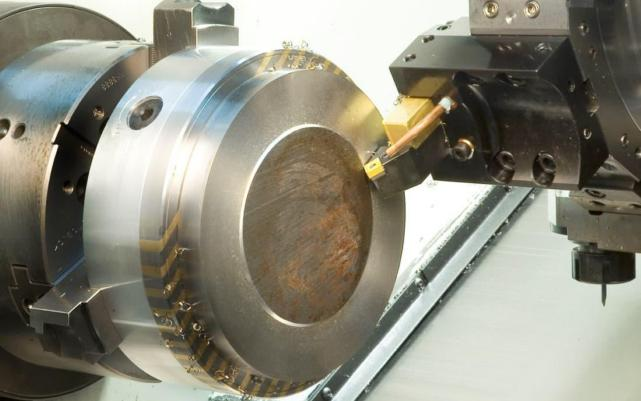
When turning round or ring-shaped workpieces, a round magnetic chuck can provide a suitable holding surface. You can use this setup on compatible lathes and rotary machining equipment.
Before choosing one, check the chuck's diameter, pole arrangement, and machine compatibility. You also need to confirm that its design supports the required rotational speed and cutting forces.
Magnetic Chucks for EDM
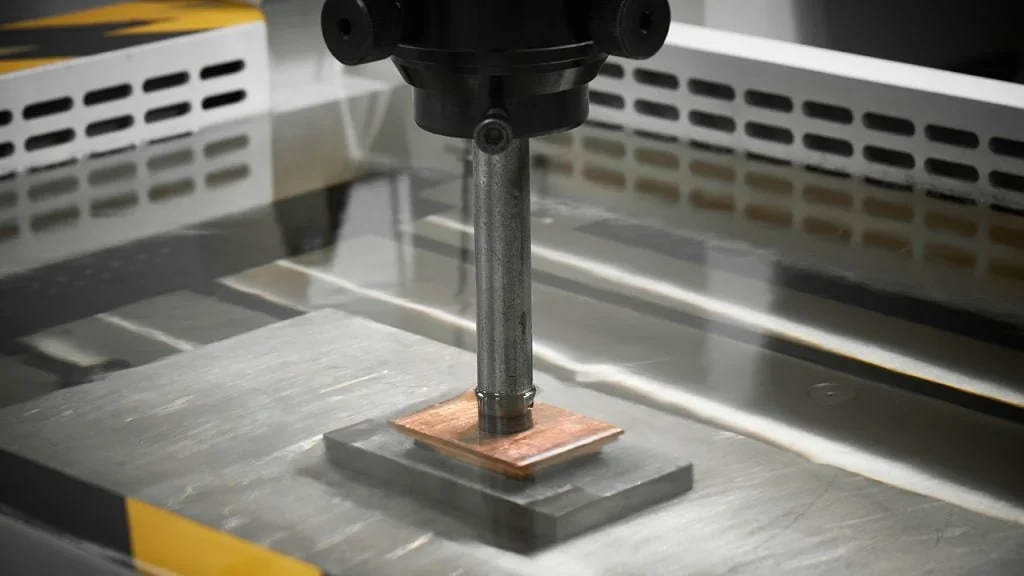
Electrical discharge machining (EDM) requires accurate workpiece positioning and suitable workholding. You can use a magnetic chuck designed for the specific EDM process when mechanical clamps would restrict tool access.
Check the chuck's dimensions, surface contact, and compatibility with your EDM setup. The workpiece must also have suitable magnetic properties for secure holding.
Magnetic Chucks for Automated Production
If you run an automated machining line, you may need a magnetic chuck that works with your machine's control system. Electro-permanent magnetic chucks are commonly used for this purpose because you can control clamping and release through electrical pulses.
With suitable CNC or PLC integration, you can coordinate workholding with automated loading, unloading, and machining cycles. This setup is useful for production lines where you need consistent clamping and repeatable workpiece positioning.
What Factors Affect Magnetic Chuck Holding Force?
The holding force of a magnetic chuck depends on more than its rated capacity. Your workpiece material, thickness, contact area, and pole arrangement all affect how well the chuck holds during machining. Understanding these factors helps you choose a suitable magnetic chuck and avoid unstable workholding.
Workpiece Material and Magnetic Properties
Your workpiece must have suitable magnetic properties for a magnetic chuck to hold it effectively. Ferromagnetic materials such as carbon steel and cast iron are commonly used. However, different steel grades have different magnetic properties, which can affect holding performance.
Austenitic stainless steel, aluminum, and other non-magnetic materials cannot be held directly by a standard magnetic chuck. Before choosing a chuck, check the actual material grade rather than relying on its general name.
Workpiece Thickness and Contact Area
Workpiece thickness affects how much magnetic flux can pass through the material. If your workpiece is too thin, some magnetic flux may pass through without contributing effectively to holding force.
The contact area also matters. A flat, clean surface helps maintain good contact between the workpiece and the chuck. Air gaps caused by surface roughness, dirt, or uneven contact can reduce magnetic holding force.
Pole Pitch and Magnetic Circuit
Pole pitch refers to the distance between adjacent magnetic poles. It affects how magnetic flux passes through your workpiece.
For effective holding, your workpiece should cover enough north and south poles to complete the magnetic circuit. You need to match the pole arrangement to the workpiece dimensions and thickness.
Keep in mind: Actual holding force also depends on the chuck design and machining conditions. Always check the manufacturer's specifications and verify that the setup can handle the expected cutting forces before machining.
How to Choose the Right Magnetic Chuck for Your Application
Choosing the right magnetic chuck starts with your workpiece and machining requirements. You need to consider the material, dimensions, cutting forces, and machine setup before deciding which type to use. The following steps can help you narrow down your options.
1. Identify Your Machining Process
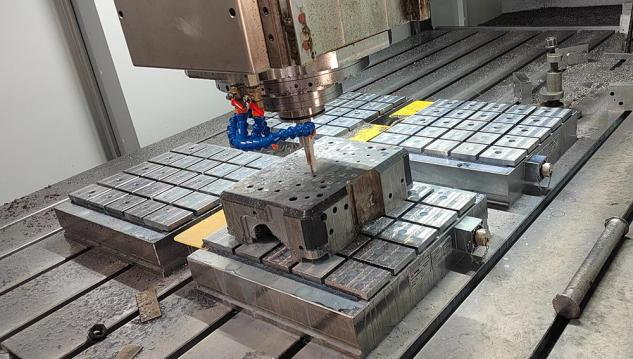
Start by identifying the machining operation you need to perform. Different processes place different demands on your workholding system.
• Surface grinding: Consider permanent or electromagnetic chucks for flat and precision workpieces.
• Milling: Look at electromagnetic or electro-permanent chucks that suit your cutting forces and machining setup.
• Turning: Consider round magnetic chucks designed for compatible rotary equipment.
• EDM: Choose a chuck that provides accurate positioning and suits your workpiece material and machine requirements.
For heavy-duty cutting, pay particular attention to the required holding force and workpiece stability.
2. Check Workpiece Dimensions and Material
Your workpiece determines the size and pole arrangement of the magnetic chuck. Check its material grade, length, width, and thickness before selecting a model.
Also consider the contact area between the workpiece and chuck. Check the chuck size, pole arrangement, and contact area against your workpiece dimensions and thickness.
3. Evaluate Machine and Control Requirements
Make sure the magnetic chuck fits your machine and its control system. Check the mounting dimensions, table size, power supply, and connection requirements.
If you use CNC equipment or an automated production line, consider whether you need electrical control or PLC integration. Electro-permanent magnetic chucks are often suitable for these setups because you can control clamping and release through electrical pulses.
4. Standard Magnetic Chucks vs. Custom Solutions
Standard magnetic chucks are a practical choice when your machine dimensions and workpiece requirements match an available model. However, you may need a custom solution if your equipment has special mounting dimensions, unusual workpiece shapes, or specific pole arrangements.
For OEM projects and machine integration, you should consider:
• Custom chuck dimensions and pole layouts.
• Machine mounting and connection interfaces.
• Required holding force and workpiece specifications.
• CNC or PLC control requirements.
MAGWORK offers a range of magnetic chuck products for different machining applications, along with customization options. You can provide your workpiece details, machine specifications, or technical drawings to discuss a suitable configuration.
Discuss Your Custom Requirements
FAQs
Q: What are the three main types of magnetic chucks?
A: The three main types are permanent magnetic chucks, electromagnetic chucks, and electro-permanent magnetic chucks. They differ in how they generate and control magnetic force. Your choice depends on your machining process, workpiece requirements, and power supply needs.
Q: What is the difference between permanent and electromagnetic magnetic chucks?
A:A permanent magnetic chuck uses built-in magnets and does not need continuous power to hold your workpiece. An electromagnetic chuck uses electric current to generate magnetic force and requires continuous power during operation. You can also adjust the holding force on suitable electromagnetic models.
Q: Which magnetic chuck is best for surface grinding?
A: You can use either a permanent or electromagnetic magnetic chuck for surface grinding. A permanent model suits general grinding tasks where you do not need frequent force adjustments. If you need electrical control over the holding force, an electromagnetic chuck may be a better choice. Your workpiece thickness and size also affect the selection.
Q: What is the difference between fine-pole and standard-pole magnetic chucks?
A: The main difference is the spacing between magnetic poles. Fine-pole magnetic chucks have smaller pole spacing and are often suitable for smaller or thinner workpieces. Standard-pole designs have wider spacing and are generally used for larger or thicker parts. You should check your workpiece dimensions and chuck specifications before choosing.
Q: Can magnetic chucks hold stainless steel?
A: It depends on the stainless steel grade. Ferritic and martensitic stainless steels can generally be attracted by magnetic chucks, while austenitic grades such as common 304 and 316 stainless steel are usually non-magnetic or weakly magnetic. Check the actual material's magnetic properties before selecting your chuck.
Q: Do electro-permanent magnetic chucks require continuous power?
A: No. An electro-permanent magnetic chuck uses a short electrical pulse to switch between clamping and release. Once activated, permanent magnets maintain the holding force without continuous power. This makes it suitable for CNC machining and automated production where power-off holding is important.
Conclusion
Choosing the right magnetic chuck depends on your workpiece, machining process, and machine requirements. Permanent, electromagnetic, and electro-permanent magnetic chucks each offer different ways to control holding force. You also need to consider the chuck's design, pole spacing, and workpiece contact area.
If a standard model does not match your equipment or production needs, a custom magnetic chuck may be a better fit. Explore MAGWORK's magnetic chuck range or contact our team with your workpiece details and machine specifications to discuss a suitable workholding solution.